Meaning of Life

You know the question. It’s the ultimate question. The question that you and I and everyone have lain awake at night thinking about.

The question that brings equal parts wonder and terror to our feeble fucking minds. Why are we here? What is the point of it all? What is the meaning of life so to speak?

Well, fortunately, I figured it out while I was drinking a coffee this morning. I’m pretty sure it’s coffee. And no, I’m not saying that just because I’m having coffee. There’s an explanation here. I’m going to explain it, clickbait titles and all, in, oh, the next eight minutes or so.

First off, before we can even appropriately ask “What is the meaning of life?” we must first settle something more subtle and something more important. Namely, what is meaning?

WHAT IS MEANING?

What is meaning? That may strike you as terribly navel-gazey and ultra-philosophical. And if that’s the case, I invite you to think about coffee for a moment, and just stick with me for a minute. Because it’s important.

What does it mean for something to mean something? As humans, we have a constant need to attach meaning to everything that happens in our lives.

Look, a guy climbed a rock looking for meaning! My mom hugs me, that must mean that she loves me. My boss complimented me, that must mean I do good work. It’s going to be sunny tomorrow, that must mean I can wear my super-cool SpongeBob tank top to the store.

Meaning is the association that we draw between two experiences or events in our minds. X happens, then Y happens, so we assume that means X causes Y. Z happens, and we get really pissed off and feel shit, therefore we assume that Z sucks.

Our brains invent meaning the way dogs shit, they do it gleefully and not even realising that they’re ruining the fucking carpet.

Our brains invent meaning as a way to explain all the crazy shit going on in the world around us. This is important, as it helps us predict and control our lives.

But let’s be real: Meaning is an arbitrary mental construct.

Fifty people can watch the exact same event and draw fifty different meanings from said event. That’s why there’s so much arguing in politics. That’s why eyewitnesses are so unreliable in court.

That’s why your friends are sometimes the biggest assholes, because that meaning you just shared, to them, meant something completely different or nothing at all

TYPES OF MEANING IN LIFE

Our brains slap together two different types of meaning:

• Cause/Effect Meaning: You kick the ball, the ball moves. You tell your friend his hair is ugly, your friend slaps you in the face. You do X, and with reliable certainty, Y will result.We all need Cause/Effect meaning to survive. It helps us predict the future and learn from the past. Cause/Effect meaning primarily involves the logical parts of our brain. Science, for instance, is the constant search of more and more Cause/Effect Meaning.

• Better/Worse Meaning: Eating is better than starving. Making money is better than being broke. Sharing is better than stealing. Better/Worse meaning has to do with the nature of our values—what we perceive to be most important and useful in our lives.Better/Worse meaning relies mostly on the emotional parts of our brains. Generally what makes us feel good is what we immediately assume to be “good” or “better.”

Both forms of meaning evolved in our brains to help us survive. For thousands of years, humans needed to remember where certain food could be found, how various animals would respond when hunted, how weather patterns change and how to read the terrain. They also needed to know what would gain them acceptance within their tribe, what would curry favour from friends and earn approval from that sexy guy/gal in the loin cloth over yonder.

So in that sense, meaning is nature’s tool for motivation. It’s how evolution made sure we got shit done. Meaning drives all of our actions. When there is great meaning attached to something, like our child is sick and starving, we will go to insane lengths to make things right. People will often even go as far as giving up their lives for some grand sense of meaning (see: religion, every war ever). Meaning is that effective at moving people.

Meaning is nature’s tool for motivation.

Conversely, when we feel we lack meaning in our lives, when shit just doesn’t seem to matter, when there’s no clarity on how or why things happen to us, we do nothing. We sit on the couch and twiddle our thumbs and watch lame reruns while complaining on the internet about lame reruns. But here’s the kicker (and I swear I’m going to get to the coffee):

Meaning is a resource that we must cultivate in our lives.

Meaning is not something that exists outside of ourselves. It is not some cosmic universal truth waiting to be discovered. It is not some grand ‘eureka’ moment that will change our lives forever.

Meaning requires action. Meaning is something that we must continually find and nurture. Consistently.

Man’s great search for the meaning of life usually ends like this.

Meaning is like the water of our psychological health. Without it, our hearts and minds will shrivel and die. And like water, meaning flows through us—what is important today is not what was important years ago, and what is important tomorrow will not be the same as what is important today. Meaning must be sought out and replenished frequently.

HOW TO FIND MEANING IN YOUR LIFE

In a very real sense, the meaning of life is therefore to create meaning. So how does one create meaning? Two ways:

• Solve Problems. The bigger the problem, the more meaning one will feel. The more work you do towards that problem, also the more meaning you will feel. Solving problems basically means finding ways to make the world a slightly better place. Can be as simple as fixing up your aging mother’s dilapidated house. Or as complex as working on the new great breakthrough in physics.The point here is not to be picky. It’s easy, when we start thinking of how insignificant we are on a cosmic scale of the universe, to start thinking there’s no point in doing anything unless we’re going to save the world or something. This is just a distraction. There are tons of small, everyday problems going on around you that need your attention. Start giving it.

• Help Others. This is the biggie. As humans, we’re wired to thrive on our relationships. Studies show that our overall well-being is deeply tied to the quality of our relationships, and the best way to build healthy relationships is through helping others. In fact, some studies have even found that giving stuff away makes us happier than giving stuff to ourselves. Go figure. As such, it seems to be a “hack” in our brains that helping out other people gives us a greater sense of meaning and purpose. Just the fact you can say to yourself, “If I died, then someone is better off because I lived,” creates that sense of meaning that can propel you forward.

THE TRAP OF SETTING GOALS

A lot of people find meaning through setting goals for themselves. They want the corner office, the big car, the fancy-pants shoes. It gives them a reason to wake up in the morning, a reason to bust their ass at work. It gives them something that makes them feel important and something to look forward to every day.

But goals are a double-edged sword. You have to be careful.

Goals are good tools for building motivation. The problem is that, by themselves, they are arbitrary and empty. Unless there’s a “why” behind the goal full of meaning, the goal itself will provide little long-term happiness or satisfaction. Ever seen star athletes flounder after retirement? Or a guy who finally made his millions become deeply miserable because he doesn’t know what else to do with his life?

Goals are dangerous because the meaning they provide when you’re working towards them is the meaning that is taken away once you achieve them.

This is why all the superficial stuff like make a billion euros, or own a Rolls Royce, or get your face plastered on the cover of a magazine all lead to a type of happiness that is shallow and short-lived—because the meaning is shallow and short-lived.

There has to be a deeper reason for your goals. Otherwise, the goals themselves will be empty and worthless in the long run.
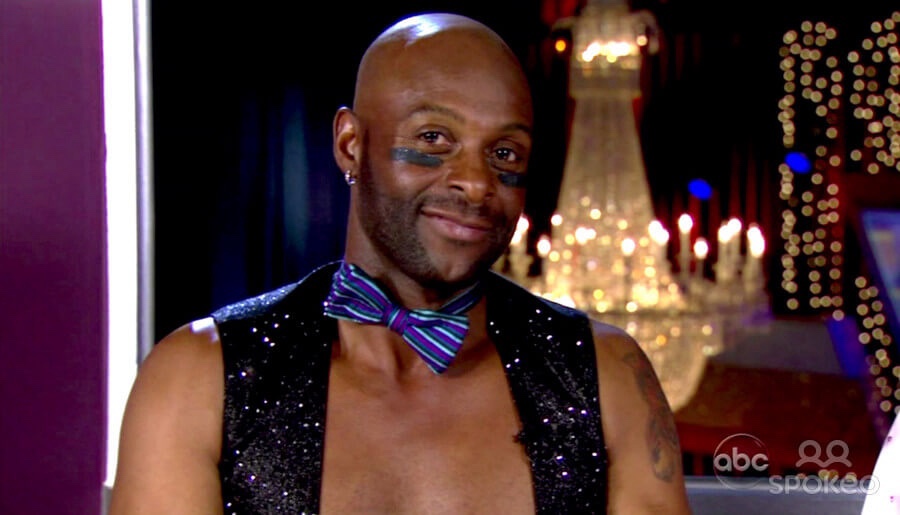
Some athletes handle retirement well. Others end up on Dancing with the fucking Stars.

Notice that it’s the athletes who aspire to be the best at their sport for some greater reason to build a charity, to start a business, to transition into another career who handle retirement the best.

Notice it’s the millionaires who spent their life working towards a deeper cause that remain content once all of their goals are checked off the checklist.

But some goals don’t even have to be big and sexy.

Take a cup of coffee. I sat down to write this blog craving a coffee. That’s a problem in my life. And I promised myself I’d pump out this draft before going and getting this magnificent sexy coffee. That gave this hour some extra meaning.

And you know what? Maybe my fiancé is craving one too and I can get her one. You know, make the world a better place and all that shit while I’m at it.

So what’s the meaning of life? Well, for me, right now, it’s a coffee. What will yours be?

PS: if you haven’t already, get a damn coffee and have an amazing day you beautiful motherfucker.

Never Trust Your Emotions

Look, I know you think the fact you feel upset or angry or anxious is important. That it matters. Hell, you probably think that because you feel like your face just got shat on makes you important. But it doesn’t. Feelings are just these… things that happen. The meaning we build around them what we decide is important or unimportant comes later.

There are only two reasons to do anything in life: a) because it feels good, or b) because it’s something you believe to be good or right. Sometimes these two reasons align. Something feels good AND is the right thing to do and that’s just fucking fantastic. Let’s throw a party and eat cake.

But more often, these two things don’t align. Something feels shitty but is right/good (getting up at 5AM and going to the gym, hanging out with grandma Joanie for an afternoon and making sure she’s still breathing), or something feels fucking great but is the bad/wrong thing to do (pretty much anything involving penises).

Acting based on our feelings is easy. You feel it. Then you do it. It’s like scratching an itch. There’s a sense of relief and cessation that comes along with it. It’s a quick satisfaction. But then that satisfaction is gone just as quickly as it fucking arrived.

Acting based on what’s good/right is difficult. For one, knowing what is good/right is not always clear. You often have to sit down and think hard about it. Often we have to feel ambivalent about our conclusions or fight through our lower impulses.

But when we do what’s good/right, the positive effects last much longer. We feel pride remembering it years later. We tell our friends and family about it and give ourselves cute little awards and put shit on our office walls and say, “Hey! I did that!”

The point is: doing what is good/right builds self-esteem and adds meaning to our lives.

YOUR TRICKY BRAIN

So we should just ignore our feelings and just do what is good/right all the time then, right? It’s simple.

Well, like many things in life, it is simple. But that doesn’t necessarily mean it’s easy.

The problem is that the brain doesn’t like to feel conflicted about its decision making. It doesn’t like uncertainty or ambiguity and will do mental acrobatics to avoid any discomfort.

So you know you shouldn’t eat ice cream or popping that beer open. But your brain says, “Hey, you had a hard day, a little bit won’t kill ya.” And you’re like, “Hey, you’re right! Thanks, brain!” What feels good suddenly feels right. And then you shamelessly inhale a bowl of Ben and Jerry’s and wash it down with a Peroni .

You know you shouldn’t cheat on your exam, but your brain says, “You’re working two jobs to put yourself through college, unlike these spoiled brats in your class. You deserve a little boost from time to time,” and so you sneak a peek at your classmate’s answers and voila, what feels good is also what feels right.

You know you should vote, but you tell yourself that the system is corrupt, and besides, your vote won’t matter anyway. And so you stay home and play with your new drone that’s probably illegal to fly in your neighborhood. But fuck it, who cares? This is Ireland and the whole point is to get fat doing whatever you want. That’s like, the sixth holy commandment, or something.

If you do this sort of thing long enough—if you convince yourself that what feels good is the same as what is good—then your brain will actually start to mix the two up. Your brain will start thinking the whole point of life is to just feel really awesome, as often as possible.

And once this happens, you’ll start deluding yourself into believing that your feelings actually matter. And once that happens, well…

If this is rubbing you the wrong way right now, just think about it for a second. Everything that’s screwed up in your life, chances are it got that way because you were too beholden to your feelings. You were too impulsive. Or too self-righteous and thought yourself the center of the universe.

Feelings have a way of doing that, you know? They make you think you’re the center of the universe. And I hate to be the one to tell you, but you’re not.

A lot of young people hate hearing this because they grew up with parents who worshipped their feelings as children, and protected those feelings, and tried to buy as many happy meals and swimming lessons as necessary to make sure those feelings were nice and fuzzy and protected at all times.

Sadly, these parents probably did this because they were also beholding their emotions, because they were unable to tolerate the pain of watching a child struggle, even if just for a moment.

They didn’t realize that children need some controlled measure of adversity to develop cognitively and emotionally, that experiencing failure is actually what sets us up for success , and that demanding to feel good all the time is pretty much a first-class ticket to having no friends once you hit adulthood.

This is the problem with organizing your life around feelings:

YOUR FEELINGS ARE SELF-CONTAINED

They are wholly and solely experienced only by you. Your feelings can’t tell you what’s best for your mother or your career or your neighbor’s dog. They can’t tell you what’s best for the environment. Or what’s best for the next parliament of Lithuania. All they can do is tell you what’s best for you… and even that is debatable.

YOUR FEELINGS ARE TEMPORARY

They only exist in the moment they arise. Your feelings cannot tell you what will be good for you in a week or a year or 20 years. They can’t tell you what was best for you when you were a kid or what you should have studied in school. All they can do is tell you what is best for you now… and even that is debatable.

YOUR FEELINGS ARE INACCURATE

Ever been talking to a friend and thought you heard them say this horrible mean thing and start to get upset and then it turned out your friend didn’t say that horrible, mean thing at all, you just heard it wrong?

Or ever got really jealous or upset with somebody close to you for a completely imagined reason? Like their phone dies and you start thinking they hate you and never liked you and were just using you for your westlife tickets?

Or ever been really excited to pursue something you thought was going to make you into a big bad ass but then later realized that it was all just an ego trip, and you pissed off a lot of people you cared about along the way?

Feelings kind of suck at the whole truth thing. And that’s a problem.

WHY IT’S HARD TO GET OVER YOUR OWN FEELINGS

Now, none of what I’m saying is really that surprising or new. In fact, you’ve probably tried to get over some of your own obnoxious feelings and impulses before and failed to do it.

The problem is when you start trying to control your own emotions , the emotions multiply. It’s like trying to exterminate rabbits. The fuckers just keep popping up all over the place.

Be vewy, vewy quiet, I’m trying to get rid of my fucking feelings.

This is because we don’t just have feelings about our experiences, we also have feelings about our feelings. I call these “meta-feelings” and they pretty much ruin everything.

There are four types of meta-feelings:

⁃ Feeling bad about feeling bad (self loathing)

⁃ Feeling bad about feeling good (guilt)

⁃ Feeling good about feeling bad (self righteousness)

⁃ Feeling good about feeling good (ego/narcissism)

Here, let me put those into a pretty little table for you to stare at:

MEET YOUR META-FEELINGS

Feeling Bad About Feeling Bad (Self-Loathing)

• Anxious/Neurotic behavior

• Suppression of emotions

• Engage in a lot of fake niceness/politeness

• Feeling as though something is wrong with you

• Feeling Bad About Feeling Good (Guilt)

• Chronic guilt and feeling as though you don’t deserve happiness

• Constant comparison of yourself to others

• Feeling as though something should be wrong, even if everything is great

• Unnecessary criticism and negativity

• Feeling Good About Feeling Bad (Self-Righteousness)

• Moral indignation

• Condescension towards others

• Feeling as though you deserve something others don’t

• Seeking out a constant sense of powerlessness and victimisation

• Feeling Good About Feeling Good (Ego/Narcissism)

• Self-congratulatory

• Chronically overestimate yourself; a delusionally-positive self-perception

• Unable to handle failure or rejection

• Avoids confrontation or discomfort

• Constant state of self-absorption

Meta-feelings are part of the stories we tell ourselves about our feelings. They make us feel justified in our jealousy. They applaud us for our pride. They shove our faces in our own pain.

They’re basically the sense of what is justified/not justified. They’re our own acceptance of how we should respond emotionally and how we shouldn’t.

But emotions don’t respond to shoulds. Emotions suck, remember? And so instead, these meta-feelings have the tendency to rip us apart inside, even further.

If you always feel good about feeling good, you will become self-absorbed and feel entitled to those around you. If feeling good makes you feel bad about yourself, then you’ll become this walking, talking pile of guilt and shame , feeling as though you deserve nothing, have earned nothing, and have nothing of value to offer to the people or the world around you.

And then there are those who feel bad about feeling bad. These “positive thinkers” will live in fear that any amount of suffering indicates that something must be sorely wrong with them. This is the feedback loop from hell that I eluded to in an earlier blog! that many of us are thrust into by our culture , our family and the self help industry at large.

But perhaps the worst meta-feeling is increasingly the most common: feeling good about feeling bad. People who feel good about feeling bad get to enjoy a certain righteous indignation. They feel morally superior in their suffering, that they are somehow martyrs in a cruel world.

These self-aggrandizing victimhood trend-followers are the ones who want to shit on someone’s life on the internet, who want to march and throw shit at politicians or businessmen or celebrities who are merely doing their best in a hard, complex world.

Much of the social strife that we’re experiencing today is the result of these meta-feelings. Moralizing mobs on both the political right and left see themselves as victimized and somehow special in every miniscule pain or setback they experience.

Greed skyrockets while the rich congratulate themselves on being rich in tandem with the increasing rates of anxiety and depression as the lower and middle classes hate themselves for feeling left behind.

These narratives are spun not only by ourselves but fed by the narratives invented in the media. Right-wing talk show hosts stoke the flames of self-righteousness, creating an addiction to irrational fears that people’s society is crumbling around them. Political memes on the left create the same self-righteousness, but instead of appealing to fear, they appeal to intellect and arrogance.

Consumer culture pushes you to make decisions based on feeling great and then congratulates you for those decisions, while our religions tell us to feel bad about how bad we feel.

CONTROL MEANING, NOT EMOTIONS

To unspin these stories we must come back to a simple truth:

Feelings don’t necessarily mean anything.

They merely mean whatever you allow them to mean.

Maybe I’m sad today. Maybe there are eight different reasons I can be sad today. Maybe some of them are important and some of them aren’t. But I get to decide how important those reasons are—whether those reasons state something about my character or whether it’s just one of those sad days.

This is the skill that’s perilously missing today: the ability to de-couple meaning from feeling, to decide that just because you feel something, it doesn’t mean life is that something. This skill is so crucial to living an emotionally healthy life.

So with all this being said, have a great Monday. A great and fulfilling week.

But most of all DRINK YOUR DAMN COFFEE!

Self Care

Self care seems to be the “popular” thing to discuss and give talks on nowadays, while also charging you €100 for the privilege 😉, but what does it actually mean for me and you?

Well like I said, tactical psychology is all about taking the bullshit out of psychology so let’s get into it 🤝🏻

Limit your exposure to toxic people, toxic information, and toxic environments.

This means learning to say “no” (remember our last conversation about saying no? if not, click the link to give it a read https://tactical-psychology.com/2023/01/06/saying-no/) saying no doesn’t always mean just uttering the words “no” to someone it also means learning how to be fine on your own.

Do the unpleasant, unsexy habits that make everything else possible. Go to bed at a reasonable hour. Stay in on a Wednesday night. Pay off your credit card or credit union loan. Floss. It’s not sexy, but it has to be done.

Challenge yourself regularly.

When people think of self-care, they think it means getting away from life. But self-care means enriching your life with interesting challenges that force you to grow.

Have difficult conversations.

The quality of your life is proportional to the quality of your relationships. Take care of those relationships by having the uncomfortable conversations that result in trust and respect.

Rest. You don’t need to book a €500 spa treatment to rest. You don’t need to have a selfie in a hammock in the Caribbean to rest. Rest means rest. It can be your couch, your bed, on the floor, or in the arms of someone you care about.

So this weekend take some time to implement some self care, place yourself at the top of your priority list and enjoy the weekend!

Oh and don’t forget to drink your coffee 😏

#taketimetothink #tacticalpsychology #rules #lifecoach #lifelessons #liferules #psychology

Why we should be in constant search of doubt

Why we should be in constant search of doubt

Growth is an endlessly iterative process. When we learn something new, we don’t go from “wrong” to “right.” Rather, we go from wrong to slightly less wrong. And when we learn something additional, we go from slightly less wrong to slightly less wrong than that, and then to even less wrong than that, and so on. We are always in the process of approaching truth and perfection without actually ever reaching truth or perfection.

We shouldn’t seek to find the ultimate “right” answer for ourselves, but rather, we should seek to chip away at the ways that we’re wrong today so that we can be a little less wrong tomorrow I mean Rome wasn’t built in a day right?

When viewed from this perspective, personal growth can actually be quite scientific (stay with me here it won’t sound boring I promise). Our values are our hypotheses: this behaviour is good and important, that other behavior is not. Our actions are the experiments, the resulting emotions and thought patterns are our data (thank you 4yrs of statistical analysis 😂)

There is no correct dogma or perfect ideology. There is only what your experience has shown you to be right for you and even then, that experience is probably somewhat wrong too.

And because you and I and everybody else all have differing needs and personal histories and life circumstances, we will all inevitably come to differing “correct answers about what our lives mean and how they should be lived. My correct answer involves traveling for years on end, living in obscure places, and laughing at my own farts. Or at least that was the correct answer up until recently, now I laugh at my fiancés farts too 😉

That answer will change and evolve however, because I change and evolve and as I grow older and more experienced, I chip away at how wrong I am, becoming less and less wrong every day.

Many people become so obsessed with being “right” about their life that they never end up actually living it.

A certain woman is single and lonely and wants a partner, but she never gets out of the house and does anything about it, instead she’s putting up Instagram stories with the caption “live, laugh, love” yes you know the stories I’m referring too. A certain man works his ass off and believes he deserves a promotion, but he never explicitly says that to his boss, he instead expects his boss to perform some sort of Harry Potter spell and read his damn mind.

They’re told that they’re afraid of failure, of rejection, someone saying no, but that’s not it. Sure, rejection hurts. Failure fucking sucks. But there are particular certainties that we hold on to, certainties that we’re afraid to question or let go of, values that have given our lives meaning over the years. That woman doesn’t get out there and date because she would be forced to confront her beliefs about her own desirability. That man doesn’t ask for the promotion because he would have to confront his beliefs about what his skills are actually worth.

It’s easier to sit in a painful certainty that nobody would find you attractive, that nobody appreciates your talents, than to actu ally test those beliefs and find out for sure.

Beliefs of this sort, that I’m not attractive enough, so why bother or that my boss is an asshole, so why bother are designed to give us moderate comfort now by mortgaging greater happiness and success later on.

They’re terrible long-term strategies, yet we cling to them because we assume we’re right, because we assume we already know what’s supposed to happen. In other words, we assume we know how the story ends.

Certainty is the enemy of growth. Nothing is for certain until it has already happened and even then, it’s still debatable.

That’s why accepting the inevitable imperfections of our values is necessary for any growth to take place.

Instead of striving for certainty, we should be in constant search of doubt, doubt about our own beliefs. doubt about our own feelings, doubt about what the future may hold for us unless we get out there and create it for ourselves. Instead of looking to be right all the time, we should be looking for how we’re wrong all the time. Because we are.

Being wrong opens us up to the possibility of change. Being wrong brings the opportunity for growth. It means not cutting your arm open to cure a cold or splashing dog piss on your face to look young again. It means not thinking “mediocre” is a vegetable, and not being afraid to care about things.

Because here’s something that’s weird but true, we don’t actually know what a positive or negative experience is. Some of the most difficult and stressful moments of our lives also end up being the most formative and motivating.

Some of the best and most gratifying experiences of our lives are also the most distracting and demotivating. Don’t trust your conception of positive/negative experiences. All that we know for certain is what hurts in the moment and what doesn’t. And that’s not worth much.

So this weekend don’t try to be “right” embrace doubt and drink your fucking coffee.. or beer seen as it is the weekend!

See you on Monday! 🫡

#energyweshare #tacticalpsychology #psychology #doubt #embrace #positive #energy #lifecoach #lifelessons

The Dark Side of Social Media

Why social media is a problem!

Yes I think we can all gather from our collective time on social media whether it be Facebook or instagram, that some days it just makes you feel like shit.

Yes I know its ironic I’ve prob posted this on instagram myself but social media has its benefits, like getting your ass over here to read this master piece 😉

Now why does it make us feel like shit I hear you ask? Well for many reasons.

But for now I want to focus on something Alan Watts referred to as the “backwards law”, which in simplistic terms focused on the idea that the more you focused or pursued greatness the less satisfied you become, as this constant pursuit of something just like that brand new BMW such and such influencer on Instagram received this week for no particular reason other than they have a million followers, subconsciously reinforces the fact that you lack it in the first place, because if you’re being honest with yourself, you most likely wouldn’t have thought about any BMW before seeing that post, you would’ve went on about your day drinking your latte all happy in your bubble.

Furthermore, the more you desperately want to be rich, the more poor and unworthy you feel, regardless of how much money you actually make. The more you desperately want to be sexy and desired, the uglier you come to see yourself, regardless of your actual physical appearance. The more you desperately want to be happy and loved, the lonelier and more afraid you become, regardless of those who surround you. The more you want to be spiritually enlightened, the more self centred and shallow you become in trying to get there.

You will never be happy if you continue to search for what happiness consists of. You will never live if you are looking for the meaning of life.

Do you see where this is going? 💭

Back in your grandads day, he would feel like shit and think to himself, “Jesus, I sure do feel like shit today. But hey, I guess that’s just life. Anyway, back to shovelling hay and laying bricks”

But now? Now if you feel like shit for even five minutes, you’re bombarded with hundreds if not thousands of images of people totally happy and having amazing fucking lives, and it’s impossible to not feel like there’s something wrong with you and alas you start chasing happiness once again.

It’s this last part that gets us into trouble tho. We feel bad about feeling bad. We feel guilty for feeling guilty. We get angry about getting angry. We get anxious about feeling anxious. “What is wrong with me?” You might even say.

We joke online about “first-world problems,” but we really have become victims of our own success and innovation. Stress-related health issues, anxiety disorders, and cases of depression have skyrocketed over the past thirty years, despite the fact that everyone has a flat-screen TV and can have their groceries delivered right to your door.

Having the Internet, Google, Facebook, YouTube, and access to five hundred plus channels of television is amazing.

But our attention is limited. There’s no way we can process the tidal waves of information flowing past us constantly. Therefore. the onlv zeroes and ones that break through and catch our attention are the truly exceptional pieces of information those in the 99.999th percentile.

All day, every day, we are flooded with the truly extraordinary. The best of the best. The worst of the worst. The greatest physical feats. The funniest jokes. The most upsetting news. The scariest threats. Nonstop.

Our lives today are filled with information from the extremes of the bell curve of human experience, because in the media business that’s what gets eyeballs, and eyeballs bring euros. That’s the bottom line. Yet the vast majority of life resides in the humdrum middle. The vast majority of life unextraordinary, indeed quite average.

This flood of extreme information has conditioned us to believe that exceptionalism is the new normal. And because we’re all quite average most of the time, the deluge of exceptional information drives us to feel pretty damn insecure and desperate, because clearly we are somehow not good enough.

Our crisis is no longer material; it’s existential, it’s spiritual. We have so much fucking stuff and so many opportunities that we don’t even know what to give a fuck about anymore.

Because there’s an infinite amount of things we can now see or know, there are also an infinite number of ways we can discover that we don’t measure up, that we’re not good enough, that things aren’t as great as they could be. And this rips us apart inside.

So if you’re going to do anything this week let it be this. Turn it the fuck off. All of it. YouTube, Instagram, the entire lot. Go outside reconnect with nature, meet actual people in a cafe or for a walk, smile, embrace life outside of the digital prison we sometimes find ourselves in.

If you can do this, I promise you, you will be a much happier and fulfilled individual, who will be rejuvenated to tackle anything in your life both professionally and personally.

Happy Monday!

Oh I nearly forgot, CRUSH THIS WEEK! And drink your coffee 🧠🫡

#learning #liferules #lifecoach #tacticalpsychology #blog #psychology #positivity #energyweshare